

Panelists
-
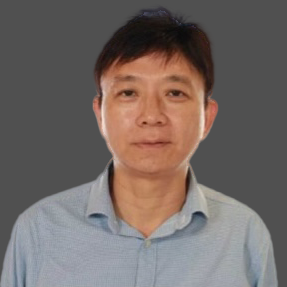 Yew-Soon OngNanyang Technological University, Singapore
Prof. Yew-Soon Ong is currently an Endowed Yidan Professor in Artificial Intelligence at the College of Computing & Data Science, Nanyang Technological University (NTU), Singapore, Distinguished AI Fellow (Joint Appointment) of the Singapore's Agency for Science, Technology and Research (A*STAR), Professor (Joint Appointment) of the National Institute of Education, Singapore. He was President's Chair Professor in Computer Science at the College of Computing & Data Science (2019-2026), Chief Artificial Intelligence Scientist of A*STAR (2019-2026), Chair of the School of Computer Science and Engineering, Nanyang Technological University (2016-2019), Director of the Singtel-NTU Cognitive & Artificial Intelligence Joint Lab (SCALE@NTU) (2017-2025), Director of Data Science and AI Research Centre (2017-2020), Director of the Centre for Computational Intelligence/Computational Intelligence Laboratory (2008-2015) and Programme Principal Investigator of the Data Analytics & Complex System Programme in the Rolls-Royce@NTU Corporate Lab (2013-2017).
He received his Bachelor's and Master's degrees from Nanyang Technological University and subsequently his PhD on Artificial Intelligence in Complex Engineering Design from the University of Southampton, United Kingdom. He is a Fellow of IEEE, Fellow of the Singapore national academy of engineering, founding Editor-In-Chief of the IEEE Transactions on Emerging Topics in Computational Intelligence, founding Technical Editor-In-Chief of Memetic Computing Journal (Springer), Senior Editor of IEEE Transactions on Neural Network & Learning Systems, Associate Editor of IEEE Transactions on Evolutionary Computation, IEEE Transactions on Cybernetics, IEEE Transactions on Artificial Intelligence, and chief co-editor of Book Series on Studies in Adaptation, Learning, and Optimization.
He has received five IEEE outstanding paper awards and was listed as a Thomson Reuters highly cited researcher and among the World's Most Influential Scientific Minds. He has published over 300 referred papers at ICML, ICLR, NeurIPS, IJCAI, AAAI, CVPR, KDD, WWW, AAMAS and ACM/IEEE Transactions. In AI, he has been a keynote speaker or senior area chair or area chair of AAAI, IJCAI, ICLR, ICML, NeurIPS, KDD, ICONIP and others.
BiographyTopic & AbstractTitleTBDAbstractTBD -
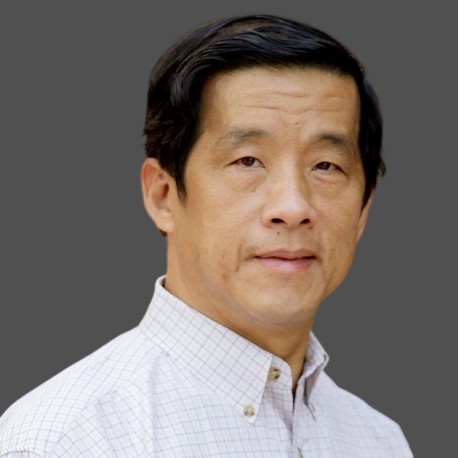 Gary G. YenSichuan University, China
Prof. Gary G. Yen is a Chair Professor at Sichuan University, and formerly held an Endowed Chair at Oklahoma State University. He received his Ph.D. degree in electrical and computer engineering from the University of Notre Dame in 1992. He was a Regents Professor in the School of Electrical and Computer Engineering, Oklahoma State University. He recently joined Sichuan University, College of Computer Science as a Chair Professor.
His research interests include intelligent control, computational intelligence, evolutionary multiobjective optimization, conditional health monitoring, signal processing, and their industrial/defense applications. Gary was an associate editor of the IEEE Transactions on Neural Networks, IEEE Transactions on Evolutionary Computation, IEEE Transactions on Emerging Topics on Computational Intelligence, and IEEE Control Systems Magazine during 1994-1999, and of the IEEE Transactions on Control Systems Technology, IEEE Transactions on Systems, Man and Cybernetics (Parts A and B) and IFAC Journal on Automatica and Mechatronics during 2000-2010. He currently serves as an Associate Editor of IEEE Transactions on Cybernetics and IEEE Transactions on Artificial Intelligence, and will serve as the Editor-in-Chief of IEEE Transactions on Evolutionary Computation (TEVC) from 2027 onward.
He served as Vice President for the Technical Activities, IEEE Computational Intelligence Society in 2004-2005 and was the founding editor-in-chief of the IEEE Computational Intelligence Magazine, 2006-2009. He was elected to serve as the President of the IEEE Computational Intelligence Society in 2010-2011 and is elected as a Distinguished Lecturer for the term 2012-2014, 2016-2018, 2021-2023, and 2025-2027. He received Regents Distinguished Research Award from OSU in 2009, 2011 Andrew P Sage Best Transactions Paper award from IEEE Systems, Man and Cybernetics Society, 2013 Meritorious Service award from IEEE Computational Intelligence Society and 2014 Lockheed Martin Aeronautics Excellence Teaching award. He is a Fellow of IEEE, IET and IAPR.
BiographyTopic & AbstractTitleTBDAbstractTBD
-
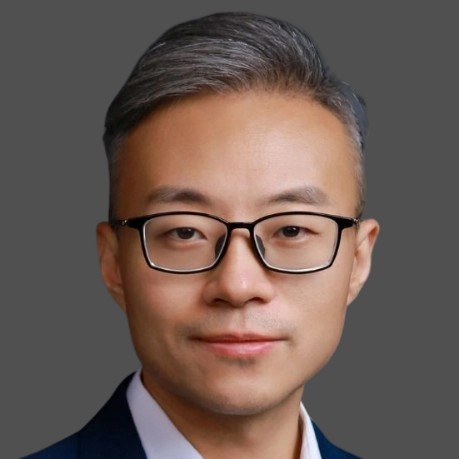 Ran ChengThe Hong Kong Polytechnic University, Hong Kong SAR, China
Ran Cheng is Associate Head for Outreach and Partnership, Associate Professor, and Presidential Young Scholar in the Department of Data Science and Artificial Intelligence at The Hong Kong Polytechnic University. Before joining PolyU, he served as an Associate Professor at the Southern University of Science and Technology. His current responsibilities combine research, teaching, academic outreach, and partnership development. His research focuses on computational intelligence for modelling and optimizing complex systems, with particular interests in evolutionary computation, representation learning, and efficient, scalable optimization. He develops learning-assisted and data-driven methods for problems in which objective evaluation is expensive, decision spaces are large, or system behavior is difficult to model directly.
BiographyTopic & AbstractTitleTBDAbstractTBD -
 Jose A. LozanoUniversity of the Basque Country (UPV/EHU) & Basque Center for Applied Mathematics (BCAM), Spain
Prof. Jose A. Lozano received his M.Sc. degrees in Mathematics (1991) and Computer Science (1992), and his Ph.D. in Computer Science (1998) (Best Engineering Thesis Award) from the University of the Basque Country (UPV/EHU). He is Full Professor in the Department of Computer Science and Artificial Intelligence at UPV/EHU and leads the Intelligent Systems Group. Since 2019 he has served as the Scientific Director of the Basque Center for Applied Mathematics (BCAM). He was named IEEE Fellow in 2021. He has published more than 180 ISI-indexed journal articles, several of them highly cited, and has contributed influential books, edited volumes and special issues in machine learning, evolutionary computation and probabilistic modelling.
His research interests include combinatorial optimization, machine learning, probabilistic graphical models, time-series analysis and applications in fields such as medicine, biology and ecology. He has supervised over 30 PhD theses, many recognized with national and international awards, and has received distinctions such as the Basque Country Research Award (2024) and several best paper awards.
Prof. Lozano has held leading roles in the organization of major conferences, including serving as General Chair of IEEE CEC 2017 and ECML-PKDD 2021, and Program Chair of GECCO 2020. He has served on editorial boards of journals such as IEEE Transactions on Evolutionary Computation, IEEE Transactions on Neural Networks and Learning Systems, Evolutionary Computation and ACM Transactions on Evolutionary Learning and Optimization.
BiographyTopic & AbstractTitleTBDAbstractTBD -
 Chao QianNanjing University, China
Chao Qian is a Professor, doctoral supervisor, and Assistant to the Dean in the School of Artificial Intelligence at Nanjing University, where he is also a member of the LAMDA Group and Director of the Sinopec–Nanjing University Data Joint Laboratory. Before returning to Nanjing University as an Associate Professor in 2019, he served as an Associate Researcher in the School of Computer Science and Technology at the University of Science and Technology of China. He was promoted to Professor in 2024 and has also held visiting research appointments at the University of the Basque Country and the University of Birmingham. His professional service includes serving as Founding Chair of the IEEE Computational Intelligence Society Task Force on Evolutionary Learning and as a member of its Evolutionary Computation Technical Committee. His research focuses on artificial intelligence, evolutionary computation, and machine learning, including evolutionary algorithm theory, black-box optimization, learning to optimize, evolutionary learning, and applications in science and electronic design automation.
BiographyTopic & AbstractTitleTBDAbstractTBD -
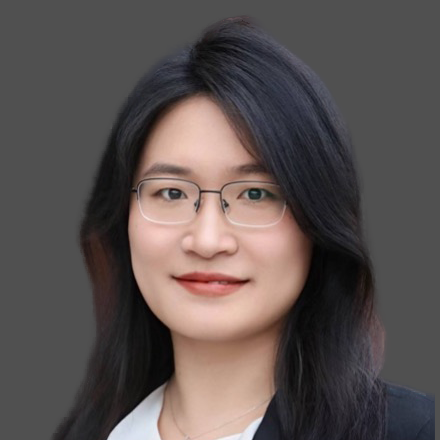 Sha ZhaoZhejiang University, China
Prof. Sha Zhao is a Professor and Doctoral Supervisor at the College of Computer Science and Technology / The State Key Lab of Brain-Machine Intelligence, Zhejiang University. She also serves as the Deputy Secretary-General of the CCF Technical Committee on Pervasive Computing.
Her research focuses on Brain-Computer Interfaces and Artificial Intelligence, with an emphasis on non-invasive neural signal decoding and closed-loop regulation. She has published over 50 high-quality papers and has received five Best Paper/Award honors, including the ACM UbiComp Best Paper Award (CCF-A; first-authored and the first from China). In 2022, she was honored with the ACM Hangzhou Rising Star Award. She has led several prestigious research projects, including grants from the National Natural Science Foundation of China (General and Youth Programs), the Zhejiang Provincial Natural Science Foundation (Key Program), and sub-projects of STI 2030 Major Projects.
She actively contributes to the academic community as a Program Committee Member for top-tier conferences such as ICLR and NeurIPS, and as a reviewer for leading international journals including TCDS, TNSRE, and JBHI.
BiographyTopic & AbstractTitleTBDAbstractTBD -
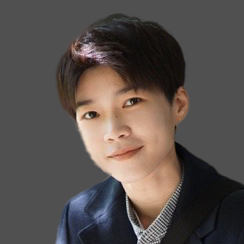 Yajing ZhengPeking University, China
Dr. Yajing Zheng is a Boya Postdoctoral Fellow at Peking University and an Honorary Research Fellow at University College London (UCL), where she works under the guidance of Prof. Karl Friston. She serves as the Deputy Secretary-General of the CSIG Technical Committee on Brain-Inspired Vision. Her research focuses on brain-inspired computing, neuromorphic vision, spiking neural networks, and active inference. She led the development of SpikeCV, an open-source project for spike vision, which received the 2023 OpenI Excellent Project Incubation Award and Excellent Developer Award.
Dr. Zheng serves as an Area Chair for CVPR 2026 and WACV 2027, and as a reviewer for Nature Human Behaviour, NeurIPS, CVPR, ICCV, and ICML. She was recognized as an Outstanding Reviewer at ICCV 2023. She has led several national and municipal research projects and received honors including the CCF Outstanding Doctoral Dissertation Award, Peking University Outstanding Doctoral Dissertation Award, and Peking University Outstanding Postdoctoral Fellow. She has published over 20 papers as first or corresponding author in venues including TPAMI, TIP, Cell Patterns, NeurIPS Spotlight, CVPR Highlight, and AAAI.
BiographyTopic & AbstractTitleTBDAbstractTBD
-
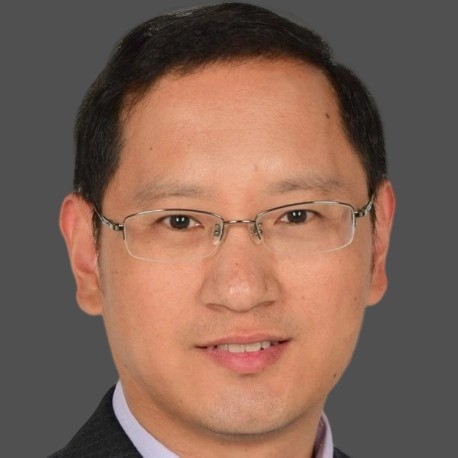 Jinliang DingNortheastern University, China
Jinliang Ding is a Level-II Professor and doctoral supervisor at Northeastern University. He currently serves as Deputy Director of the State Key Laboratory of Synthetical Automation for Process Industries, Dean of the College of Future Technology, Executive Vice Dean of both the College of Information Science and Engineering and the College of Robot Science and Engineering, and a member of Northeastern University’s Eighth Academic Committee. He is a recipient of the National Science Fund for Distinguished Young Scholars and has been selected for several national-level talent programs. His research focuses on intelligent modelling, optimization, decision-making and control of complex industrial processes, production-wide operational optimization, industrial big-data analytics, machine learning, and computational intelligence. He has led more than 30 major research projects and published over 200 papers, including more than 100 articles in leading IEEE and IFAC journals. His honors include the Best Paper Award of Control Engineering Practice for 2011–2013, the 14th China Youth Science and Technology Award, the Second Prize of the State Technological Invention Award, and four provincial or ministerial first prizes. He is an IEEE Senior Member, an Executive Council Member of the Chinese Association of Automation, and Deputy Director of its Process Control Technical Committee. He also serves on the IFAC technical committees for Mining, Mineral and Metal Processing and Large Scale Complex Systems, and holds editorial positions with IEEE Transactions on Evolutionary Computation, IEEE Transactions on Emerging Topics in Computational Intelligence, IEEE Transactions on Circuits and Systems II, and Control Engineering of China.
BiographyTopic & AbstractTitleTBDAbstractTBD -
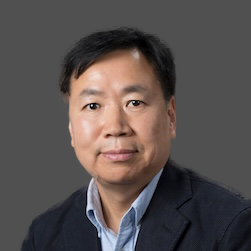 Zengguang HouInstitute of Automation, Chinese Academy of Sciences, China
Zeng-Guang Hou is Professor at the Institute of Automation, Chinese Academy of Sciences, and Chair Professor in the School of Artificial Intelligence at the University of Chinese Academy of Sciences. He also holds guest-professor appointments at Macau University of Science and Technology and the University of Science and Technology Beijing. His earlier posts include Associate Professor at the Institute of Automation, Visiting Professor at the University of Saskatchewan, Research Assistant at The Hong Kong Polytechnic University, and postdoctoral researcher at the Institute of Systems Science, Chinese Academy of Sciences. He serves as a Vice President of the Chinese Association of Automation and on the INNS Board of Governors. His research spans intelligent control, computational intelligence, rehabilitation and assistive robotics, and medical robots for intervention and surgery.
BiographyTopic & AbstractTitleTBDAbstractTBD -
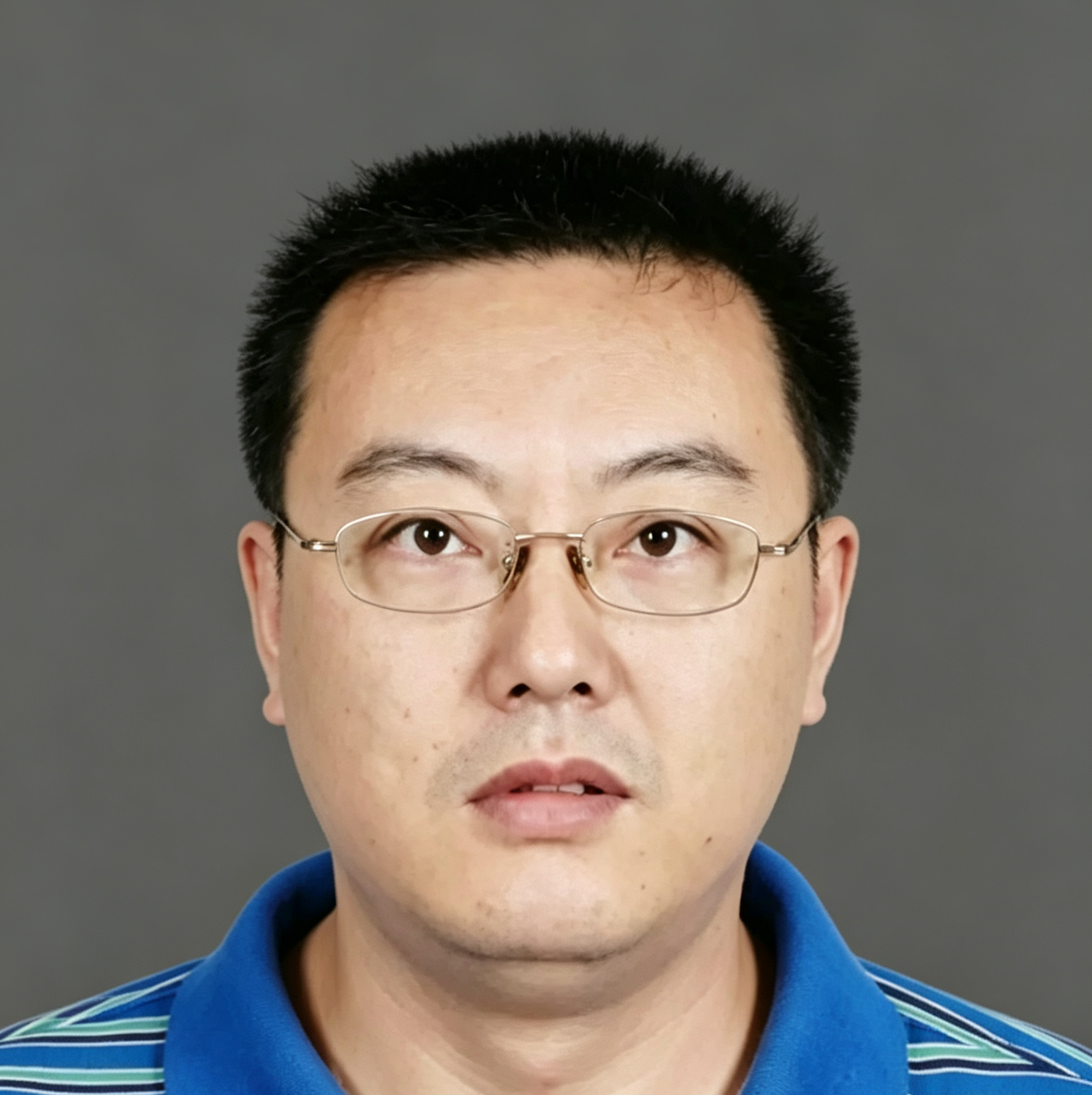 Xiaofeng LiaoChongqing University, China
Xiaofeng Liao, Professor and a Chang Jiang Scholar Distinguished Professor at Chongqing University. He is a Fellow of IEEE, the Asia-Pacific Artificial Intelligence Association, and the Artificial Intelligence Industry Alliance. He is also a recipient of the State Council Special Government Allowance and an Academic and Technical Leader of Chongqing. He previously served as Dean of the School of Computer Science and Deputy Director of the Faculty of Information at Chongqing University, as well as Dean of the School of Electronic and Information Engineering at Southwest University. He currently directs the Key Laboratory of Dependable Service Computing in Cyber Physical Society of the Ministry of Education. He formerly served as an Associate Editor of IEEE Transactions on Cybernetics and currently serves as Editor-in-Chief of the Journal of Machine Learning and Information Security and on the editorial boards of IEEE Transactions on Neural Networks and Learning Systems, Big Data Mining and Analytics, and several leading Chinese journals.
BiographyTopic & AbstractTitleTBDAbstractTBD -
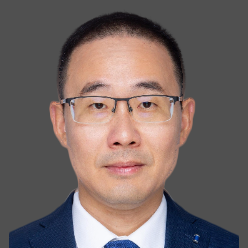 Tao XiangChongqing University, China
Tao Xiang is a Professor, doctoral supervisor, and Dean of the School of Computer Science at Chongqing University. He has been selected for a national-level talent program and serves as the chief scientist of a project under the National Key Research and Development Program of China. He is a recipient of the Ministry of Education’s Program for New Century Excellent Talents in University, the Chongqing Outstanding Youth Science Fund, and the Chongqing Talents Program as an Innovation Leading Talent. He serves as a center director within the Key Laboratory of Dependable Service Computing in Cyber Physical Society of the Ministry of Education and as Deputy Director of the Sichuan Engineering Technology Research Center for Cyberspace Attack and Defense. He is also Deputy Secretary-General of the Chongqing Artificial Intelligence Technology Innovation Strategic Alliance and a member of the Academic Committee of Chongqing University and the Chongqing Teaching Steering Committee for Computer Science Programs. He has been a visiting scholar at the Chinese University of Hong Kong, City University of Hong Kong, and the University of Massachusetts Lowell. His research focuses on blockchain, privacy preservation, artificial intelligence security, multimedia security, cloud computing security, and big-data security.
BiographyTopic & AbstractTitleTBDAbstractTBD -
 Xingyi ZhangAnhui University, China
Xingyi Zhang is a Professor and doctoral supervisor at Anhui University, where he serves as Dean of the School of Computer Science and Technology. He is an IEEE Fellow, a recipient of the State Council Special Government Allowance, and a Distinguished Professor under a national major talent program in artificial intelligence, supported by the National Science Fund for Excellent Young Scholars. He also directs the Key Laboratory of Intelligent Computing and Signal Processing of the Ministry of Education and serves as Vice President of the Anhui Association of Artificial Intelligence. His research focuses on multiobjective evolutionary optimization, cognitive computing for complex networks, and artificial intelligence. He has published over 200 papers, including more than 100 in leading venues such as IEEE TEVC, IEEE TNNLS, NeurIPS, and AAAI, and received the IEEE TEVC Outstanding Paper Award (2018, 2021, 2024) and the First Prize of the Anhui Provincial Natural Science Award. He serves as an Associate Editor of IEEE Transactions on Evolutionary Computation and has been repeatedly named an Elsevier Highly Cited Chinese Researcher, a Clarivate Highly Cited Researcher, and a Stanford/Elsevier World's Top 2% Scientist.
BiographyTopic & AbstractTitleTBDAbstractTBD
-
Ran ChengThe Hong Kong Polytechnic University, Hong Kong SAR, China
Ran Cheng is Associate Head for Outreach and Partnership, Associate Professor, and Presidential Young Scholar in the Department of Data Science and Artificial Intelligence at The Hong Kong Polytechnic University. Before joining PolyU, he served as an Associate Professor at the Southern University of Science and Technology. His current responsibilities combine research, teaching, academic outreach, and partnership development. His research focuses on computational intelligence for modelling and optimizing complex systems, with particular interests in evolutionary computation, representation learning, and efficient, scalable optimization. He develops learning-assisted and data-driven methods for problems in which objective evaluation is expensive, decision spaces are large, or system behavior is difficult to model directly.
BiographyTopic & AbstractTitleTBDAbstractTBD -
 Yanggang FengBeihang University, China
Yanggang Feng is Professor and doctoral supervisor in the School of Mechanical Engineering and Automation and the Robotics Institute at Beihang University, where he has worked since May 2021. Before joining Beihang, he served as a Project Researcher at the University of Tokyo from 2019 to 2021. He currently contributes to the international robotics community as an Associate Editor of IEEE Transactions on Neural Systems and Rehabilitation Engineering and IEEE Robotics and Automation Letters. His research interests include wearable and rehabilitation robots, exoskeletons, embodied artificial intelligence, and the design and control of damping systems, with an emphasis on human-robot interaction and assistive technologies that can operate safely and effectively in real-world settings.
BiographyTopic & AbstractTitleTBDAbstractTBD -
 AMing LiPeking University, China
TBD
BiographyTopic & AbstractTitleTBDAbstractTBD -
Chao QianNanjing University, China
Chao Qian is a Professor, doctoral supervisor, and Assistant to the Dean in the School of Artificial Intelligence at Nanjing University, where he is also a member of the LAMDA Group and Director of the Sinopec–Nanjing University Data Joint Laboratory. Before returning to Nanjing University as an Associate Professor in 2019, he served as an Associate Researcher in the School of Computer Science and Technology at the University of Science and Technology of China. He was promoted to Professor in 2024 and has also held visiting research appointments at the University of the Basque Country and the University of Birmingham. His professional service includes serving as Founding Chair of the IEEE Computational Intelligence Society Task Force on Evolutionary Learning and as a member of its Evolutionary Computation Technical Committee. His research focuses on artificial intelligence, evolutionary computation, and machine learning, including evolutionary algorithm theory, black-box optimization, learning to optimize, evolutionary learning, and applications in science and electronic design automation.
BiographyTopic & AbstractTitleTBDAbstractTBD -
Sha ZhaoZhejiang University, China
Prof. Sha Zhao is a Professor and Doctoral Supervisor at the College of Computer Science and Technology / The State Key Lab of Brain-Machine Intelligence, Zhejiang University. She also serves as the Deputy Secretary-General of the CCF Technical Committee on Pervasive Computing.
Her research focuses on Brain-Computer Interfaces and Artificial Intelligence, with an emphasis on non-invasive neural signal decoding and closed-loop regulation. She has published over 50 high-quality papers and has received five Best Paper/Award honors, including the ACM UbiComp Best Paper Award (CCF-A; first-authored and the first from China). In 2022, she was honored with the ACM Hangzhou Rising Star Award. She has led several prestigious research projects, including grants from the National Natural Science Foundation of China (General and Youth Programs), the Zhejiang Provincial Natural Science Foundation (Key Program), and sub-projects of STI 2030 Major Projects.
She actively contributes to the academic community as a Program Committee Member for top-tier conferences such as ICLR and NeurIPS, and as a reviewer for leading international journals including TCDS, TNSRE, and JBHI.
BiographyTopic & AbstractTitleTBDAbstractTBD -
Yajing ZhengPeking University, China
Dr. Yajing Zheng is a Boya Postdoctoral Fellow at Peking University and an Honorary Research Fellow at University College London (UCL), where she works under the guidance of Prof. Karl Friston. She serves as the Deputy Secretary-General of the CSIG Technical Committee on Brain-Inspired Vision. Her research focuses on brain-inspired computing, neuromorphic vision, spiking neural networks, and active inference. She led the development of SpikeCV, an open-source project for spike vision, which received the 2023 OpenI Excellent Project Incubation Award and Excellent Developer Award.
Dr. Zheng serves as an Area Chair for CVPR 2026 and WACV 2027, and as a reviewer for Nature Human Behaviour, NeurIPS, CVPR, ICCV, and ICML. She was recognized as an Outstanding Reviewer at ICCV 2023. She has led several national and municipal research projects and received honors including the CCF Outstanding Doctoral Dissertation Award, Peking University Outstanding Doctoral Dissertation Award, and Peking University Outstanding Postdoctoral Fellow. She has published over 20 papers as first or corresponding author in venues including TPAMI, TIP, Cell Patterns, NeurIPS Spotlight, CVPR Highlight, and AAAI.
BiographyTopic & AbstractTitleTBDAbstractTBD