
Prof. Yiu-Ming Cheung is Chair Professor of Artificial Intelligence in the Department of Computer Science and Dean of the Institute for Research and Continuing Education at Hong Kong Baptist University. He is an elected member of the European Academy of Sciences and Arts and the European Academy of Engineering, as well as a Fellow of IEEE, AAAS, IAPR, IET, BCS, and the International Academy of Artificial Intelligence Sciences. His honors include the 2023–2024 RGC Senior Research Fellow Award, the HKBU President’s Award for Outstanding Performance in Scholarly Work, and the 2023 APNNS Outstanding Achievement Award. He was elected an IEEE Computational Intelligence Society Distinguished Lecturer in 2020 and was named a Changjiang Scholar Chair Professor by the Ministry of Education of China. Professor Cheung currently serves as Editor-in-Chief of IEEE Transactions on Emerging Topics in Computational Intelligence and serves or has served as an Associate Editor of leading journals including IEEE Transactions on Cognitive and Developmental Systems, ACM Transactions on Intelligent Systems and Technology, Pattern Recognition, and Neurocomputing. His research spans machine learning, visual computing, data science, pattern recognition, multiobjective optimization, and information security.



The Editors-in-Chief Panel Session creates a forum for leaders of the IEEE CIS Transactions to share practical insights, experiences, and best practices in scholarly publishing with conference attendees. As AI and computational intelligence reshape the publication landscape through open science, reproducibility standards, and the rise of generative tools, this discussion will highlight emerging trends, key challenges, and new opportunities.
Attendees will engage directly with the Editors-in-Chief on timely topics, including evolving publication norms and their impact on research dissemination; ethical expectations for authors, reviewers, and editors; strategies for effective submission, review, and revision; policies on preprints and AI-assisted writing; strengthening peer review and addressing plagiarism and scientific misconduct; and the importance of closer collaboration between researchers and journals to advance rigor, transparency, and impact.
Panelists


Prof. Huajin Tang is a Qiushi Distinguished Professor and doctoral supervisor at Zhejiang University, an IEEE Fellow, and a recipient of a national high-level talent award in 2021. He received his bachelor’s, master’s, and doctoral degrees from Zhejiang University, Shanghai Jiao Tong University, and the National University of Singapore, respectively. From 2004 to 2006, he worked as an R&D Engineer at STMicroelectronics. He subsequently conducted postdoctoral research at the Queensland Brain Institute, University of Queensland, from 2006 to 2008. From 2008 to 2015, he worked at the Institute for Infocomm Research, ASTAR, Singapore, where he directed the Cognitive Computing and Robotic Cognition Laboratory. Since 2014, he has served as Director of the Brain-Inspired Computing Research Center at Sichuan University. His research focuses on brain-inspired computing, neuromorphic computing and chips, and intelligent robotics. He has led major projects under China’s Science and Technology Innovation 2030 “New Generation Artificial Intelligence” initiative, the National Natural Science Foundation of China, and ASTAR Singapore. His work has been featured by MIT Technology Review, Communications of the ACM, and ScienceDaily, and has received several honors, including the 2016 IEEE Transactions on Neural Networks and Learning Systems Outstanding Paper Award, the 2019 IEEE Computational Intelligence Magazine Outstanding Paper Award, the 2023 Neural Networks Best Paper Award, the 2011 A*STAR Institute for Infocomm Research Role Model Award, and the 2024 APNNS Outstanding Achievement Award. He currently serves as Editor-in-Chief of IEEE Transactions on Cognitive and Developmental Systems.

Prof. Jun Wang is Chair Professor of Computational Intelligence with appointments in the Department of Computer Science and the Department of Data Science at City University of Hong Kong. Before taking up his current role, he held academic positions at Dalian University of Technology, Case Western Reserve University, the University of North Dakota, and The Chinese University of Hong Kong. Since 2025, he has served as Editor-in-Chief of IEEE Transactions on Artificial Intelligence, extending a long record of editorial and professional leadership in computational intelligence. His research interests include neural networks, computational intelligence, optimization, data processing, and intelligent control, particularly the development of neural and optimization methods for complex engineering and decision problems.

Prof. Dongrui Wu is a Professor and Deputy Director of the Key Laboratory of the Ministry of Education for Image Processing and Intelligent Control, School of Artificial Intelligence and Automation, Huazhong University of Science and Technology, Wuhan, China. Prof. Wu's research interests include affective computing, brain-computer interface, computational intelligence, and machine learning. He has 150 publications (6,400+ Google Scholar citations; h=39), including a book "Perceptual Computing" (Wiley-IEEE Press, 2010), and five US/PCT patents. He received the IEEE International Conference on Fuzzy Systems Best Student Paper Award in 2005, the IEEE Computational Intelligence Society (CIS) Outstanding PhD Dissertation Award in 2012, the IEEE Transactions on Fuzzy Systems Outstanding Paper Award in 2014, the North American Fuzzy Information Processing Society (NAFIPS) Early Career Award in 2014, the IEEE Systems, Man and Cybernetics (SMC) Society Early Career Award in 2017, and the IEEE SMC Society Best Associate Editor Award in 2018. He was a finalist of the IEEE Transactions on Affective Computing Most Influential Paper Award in 2015, the IEEE Brain Initiative Best Paper Award in 2016, the 24th International Conference on Neural Information Processing Best Student Paper Award in 2017, the Hanxiang Early Career Award in 2018, and the USERN Prize in Formal Sciences in 2019. He was a selected participant of the Heidelberg Laureate Forum in 2013, the US National Academies Keck Futures Initiative (NAKFI) in 2015, and the US National Academy of Engineering German-American Frontiers of Engineering (GAFOE) in 2015. His team won the First Prize of the China Brain-Computer Interface Competition in 2019. Prof. Wu is an Associate Editor of the IEEE Transactions on Fuzzy Systems (2011-2018; 2020-), the IEEE Transactions on Human-Machine Systems (since 2014), the IEEE Computational Intelligence Magazine (since 2017), and the IEEE Transactions on Neural Systems and Rehabilitation Engineering (since 2019). He was the lead Guest Editor of the IEEE Computational Intelligence Magazine Special Issue on Computational Intelligence and Affective Computing, and the IEEE Transactions on Fuzzy Systems Special Issue on Brain Computer Interface. He is a Senior Member of the IEEE, a Board member and Distinguished Speaker of the NAFIPS, and a member of IEEE Systems, Man and Cybernetics Society Brain-Machine Interface Systems Technical Committee, IEEE CIS Fuzzy Systems Technical Committee, Emergent Technologies Technical Committee, and Intelligent Systems Applications Technical Committee. He has been Chair/Vice Chair of the IEEE CIS Affective Computing Task Force since 2012.
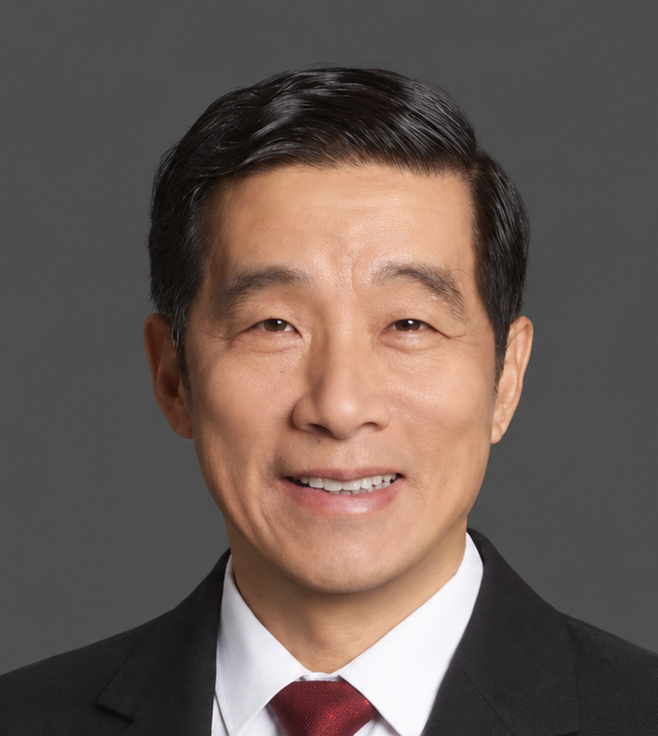
Gary G. Yen received his Ph.D. degree in electrical and computer engineering from the University of Notre Dame in 1992. He was a Regents Professor in the School of Electrical and Computer Engineering, Oklahoma State University. He recently joined Sichuan University, College of Computer Science as a Chair Professor. His research interest includes intelligent control, computational intelligence, evolutionary multiobjective optimization, conditional health monitoring, signal processing and their industrial/defense applications.
Gary was an associate editor of the IEEE Transactions on Neural Networks, IEEE Transactions on Evolutionary Computation, IEEE Transactions on Emerging Topics on Computational Intelligence, and IEEE Control Systems Magazine during 1994-1999, and of the IEEE Transactions on Control Systems Technology, IEEE Transactions on Systems, Man and Cybernetics (Parts A and B) and IFAC Journal on Automatica and Mechatronics during 2000-2010. He is currently serving as an associate editor for the IEEE Transactions on Cybernetics and IEEE Transactions on Artificial Intelligence. Gary served as Vice President for the Technical Activities, IEEE Computational Intelligence Society in 2004-2005 and was the founding editor-in-chief of the IEEE Computational Intelligence Magazine, 2006-2009. He was elected to serve as the President of the IEEE Computational Intelligence Society in 2010-2011 and is elected as a Distinguished Lecturer for the term 2012-2014, 2016-2018, 2021-2023, and 2025-2027. He received Regents Distinguished Research Award from OSU in 2009, 2011 Andrew P Sage Best Transactions Paper award from IEEE Systems, Man and Cybernetics Society, 2013 Meritorious Service award from IEEE Computational Intelligence Society and 2014 Lockheed Martin Aeronautics Excellence Teaching award. He is a Fellow of IEEE, IET and IAPR.